Why hospital nutrition requires a scientific upgrade
This post expresses the views and opinions of the author(s) and not necessarily that of The West Windsor Voice management or staff.
Aarav Narang - West Windsor-Plainsboro High School South
As a junior volunteer at a local hospital and a nursing home with Alzheimer's and dementia residents for the last two years, I have witnessed a striking paradox. Cutting edge technologies, sophisticated diagnostic tools and targeted therapies dominate the medicine landscape whereas the kitchens of the same institutions serve menus heavy in ultra-processed foods, refined sugars, and industrial gelatin.
Watching this disconnect between bench science and the patient's bedside has been genuinely jarring and it is an important area for public health evaluation.
During a weekly visit at the hospital, a patient asked me if he could get any fruit. At the hospital nursing unit, the pantry is full of processed crackers, pre-packaged chicken and turkey sandwiches and soda and juice for drinks. There is no fruit in the pantry or any whole food for that matter.. It becomes immediately clear that the system is built around packaged options that can sit in boxes for months, completely leaving out the fresh, whole foods patients need to recover. Having seen it through the eyes of a patient too few years back, I was served jello and applesauce, with strict instructions to not eat any food other than that. It did not make any sense to me. While strict rules prohibiting outside food are designed for patient safety, they also leave patients completely trapped in a system that prioritizes shelf-life over real nutrition. When someone is trying to maintain healthy habits to get better, being forced to eat junk feels entirely wrong. The reality of this situation becomes even more frustrating when you look at the actual science surrounding the human microbiome.
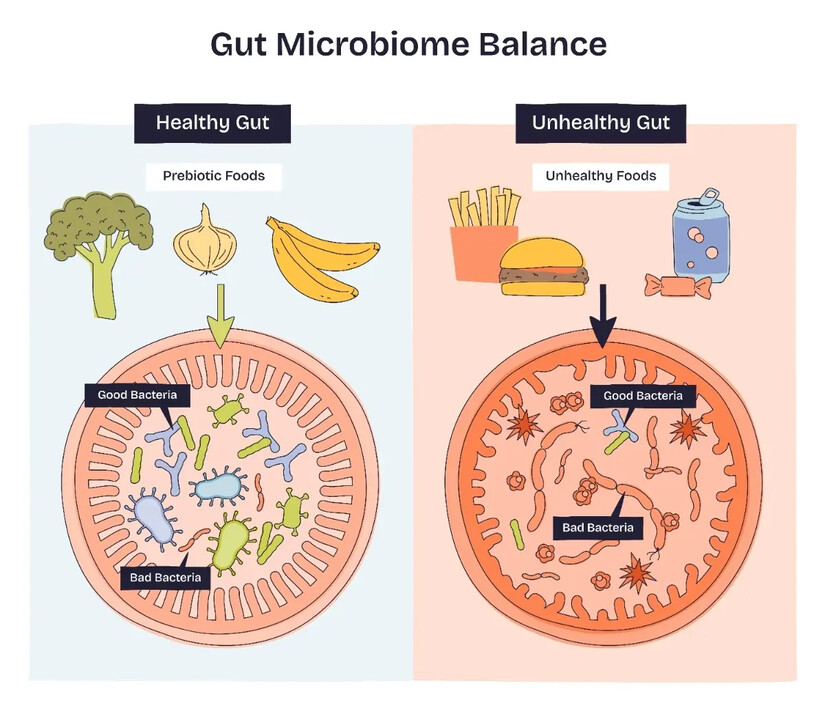
I have spent my high school years researching the gut-brain axis which was published in the American Journal of Student Research (AJSR). My study focused on the gut-brain framework, mapping how a systemic loss of healthy gut bacteria affects brain function. The science is clear on this - gut microbiome is a primary engine of physical and cognitive recovery.
Knowing this data makes looking at standard hospital food incredibly disheartening. When a patient is given a steady diet of highly processed foods, their gut is effectively starved of the diverse, nutrient-dense inputs required to lower inflammation and support healing. This is a structural byproduct of a healthcare system where food services and clinical care operate in completely separate, isolated silos.
Bridging this gap requires a major systemic overhaul.
The truth is, no single person has the immediate power to rewrite healthcare regulations, dismantle rigid bureaucracies, or alter institutional food supply chains overnight. The operational web of budgets, safety mandates, and vendor contracts is incredibly vast, and a clear blueprint for an immediate fix does not exist yet. However, recognizing this collective limitation is exactly why we must begin speaking up about these patterns. Moving forward, healthcare leadership must stop viewing institutional nutrition as a background afterthought. By bringing researchers and clinical administrators together to study how to integrate gut health science directly into patient care, our healthcare systems can slowly begin to ensure that standard meal planning actively supports, rather than slows down, the modern medicine saving lives.
OH WOW! this is genuinely jarring. I completely agree with your opinion regarding hospital nutrition! I am certain jello and applesauce was not a favorable sight to see during your time in the hospital. I remember the same experience when I had been admitted in order for my appendix to be removed. Is that why you were also there?
I read that Dana Krug is Chairwoman of the Finance Committee of the WW school board, which means to me that she is the right person to respond to Mehno's very reasonable inquiries. My hopes are that Ms. Krug will respond adequately according to her duties and capacity as Chairwoman.
We taxpayers are fortunate to have Veronica Mehno as such a concerned and knowledgeable member of our community, and I echo her concerns about the expenditures and practices of the West Windsor school administrators.
I hope Aderhold will respond to my complaint submitted to the Education Department. I have been asking the same 2 questions since August 17, 2026 and Aderhold responds by telling me that money surplus can be legally transferred to the capital reserves account.
Would it be able to contact you offline? My name is Dr.Amar Atre. I am running for BOE for WW-P in the coming election. My e-mail is atreboe@gmail.com. Number is 404-617-5969.
I request that Superintendent Aderhold respond to the questions Virginia Mehno raises. And also, why would later school start times result in additional buses and drivers with higher fuel costs?
 38° and Clear