 51° and Partly Cloudy


Image
West Windsor voters should vote against Dana Krug and Shwetha Shetty. Their record on the Board of Education has not delivered the financial accountability our community deserves.
Taxpayers deserve more than assurances that everything is fine. We deserve answers supported by numbers.
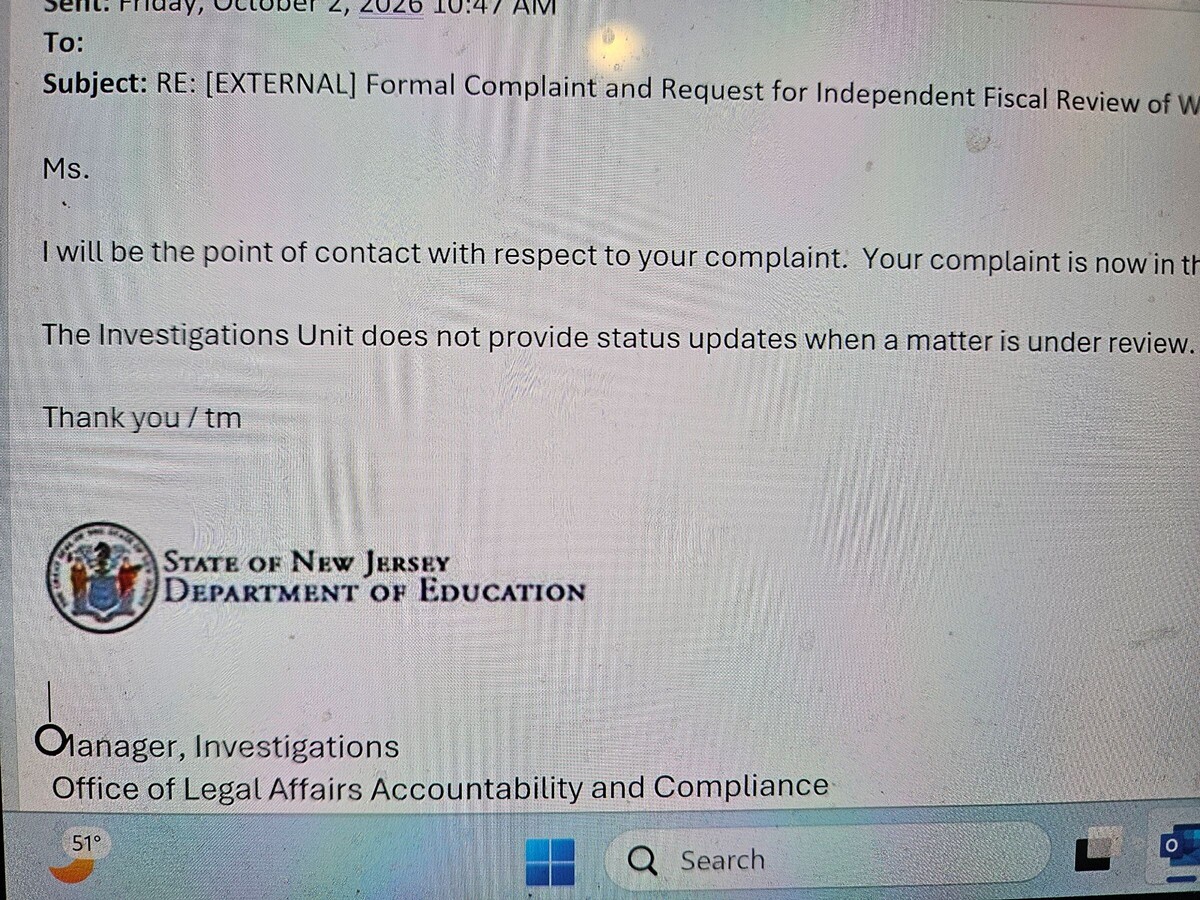
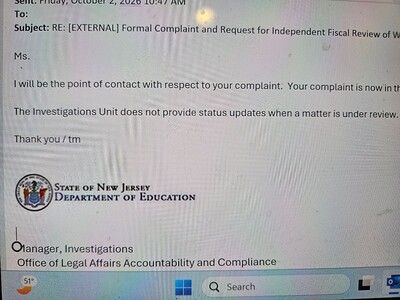
NJDOE’s Investigations Unit has confirmed that my complaint is in its investigative rotation. That complaint raises questions about approximately $50 million in accumulated differences between budgeted and actual health-insurance expenditures. There has been no finding of wrongdoing. But these questions are serious, and voters should expect board members to address them directly.
Dana Krug, as chair of the Finance Committee, should be able to explain those figures. Yet I still have not received a clear, year-by-year accounting explaining where the resulting surplus went and why substantial favorable variances continued to recur.
That is a failure of accountability.
Superintendent David Aderhold’s administration repeatedly emphasizes rising health-care costs. But rising costs do not answer the question taxpayers are asking: How much did the district budget, how much did it actually spend, and why did the difference persist year after year?
Both things can be true: health insurance can become more expensive, and a district can repeatedly budget substantially more than it ultimately spends.
The board’s responsibility is to examine that distinction. Repeating the administration’s explanation is no substitute for testing it against actual expenditures.
If Krug disputes my calculations, she should produce hers. If the administration has a sound explanation, she should present it. After years of board service, taxpayers should not still be chasing a straightforward answer from the person chairing the Finance Committee.
Saying surplus money “goes back to the schools” is equally inadequate. Does that mean capital projects? Transfers to reserves? Operating expenses? Which projects, which accounts, which years, and how much?
Public money remaining within the district does not, by itself, establish that the original budget estimates were reasonable or that the resulting tax burden was necessary.
Show us the accounting. Show us the decisions. Explain the alternatives.
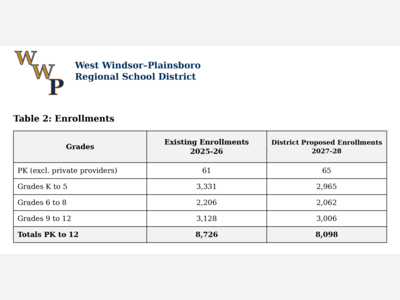
Enrollment raises another question the board must answer. The figures I have raised show a decline of approximately 723 students, with a further decline of approximately 628 projected. That would approach 1,400 fewer students across the periods involved—not 1,500 students already gone.
What staffing plan corresponds to that decline?
Fewer students do not automatically justify identical percentage cuts in personnel. Special education, student needs, class sizes, and contractual obligations matter. But those considerations require an explanation supported by data. They cannot become a permanent excuse to avoid examining staffing.
Taxpayers deserve to know how staffing has changed, which positions have been added or eliminated, and how the district plans to adjust as enrollment falls. A shrinking student population demands a serious examination of future spending commitments.
Krug and Shetty also voted to purchase 72 Grovers Mill Road for $4.25 million. Before committing millions, the board should have demanded—and publicly explained—a compelling comparison of purchasing, continuing to lease, and using existing district space.
A unanimous vote is not evidence of rigorous scrutiny. The evidence is in the questions asked, the alternatives evaluated, and the analysis shared with the public.
My objection is to a pattern of governance in which the administration’s proposals receive approval while residents struggle to obtain specific explanations.
Board members are elected to exercise independent judgment. They are supposed to question assumptions, challenge recurring discrepancies, and insist that major spending decisions withstand public scrutiny.
We should not have to accept general praise for the district in place of a financial explanation. Nor should persistent questioning be treated as a problem to manage.
The unanswered questions are the problem.
West Windsor needs board members who will insist on accurate estimates, explain where surplus funds go, and connect staffing and facilities decisions to enrollment and educational needs.
Krug and Shetty have had the opportunity to demonstrate that leadership. In my judgment, their record falls short.
Vote against Krug and Shetty. Vote for independent oversight, clear answers, and accountability for every tax dollar.


Overcast, with a high of 60 and low of 44 degrees. Sunny in the morning, overcast in the afternoon and evening,


I would like to see the Long Range Forecast you cited. I have been tracking enrollment for over 5 years. The 8098 projected enrollment would represent a 17% decrease in enrollment over the past 10 years!
Stephen I sent you 2 emails with all the information. Full disclosure, the information that I sent you came directly from Aderhold or his administration.

I read that Dana Krug is Chairwoman of the Finance Committee of the WW school board, which means to me that she is the right person to respond to Mehno's very reasonable inquiries. My hopes are that Ms. Krug will respond adequately according to her duties and capacity as Chairwoman.
I will give her the benefit of the doubt. But Krug never responds to any inqueries.....she is not approachable nor she cares.


Is all of that $54.3M accounted for and where is it?
That is a question that I have been asking Aderhold and I have not received any answer. I do not know where it went.
We taxpayers are fortunate to have Veronica Mehno as such a concerned and knowledgeable member of our community, and I echo her concerns about the expenditures and practices of the West Windsor school administrators.
I hope Aderhold will respond to my complaint submitted to the Education Department. I have been asking the same 2 questions since August 17, 2026 and Aderhold responds by telling me that money surplus can be legally transferred to the capital reserves account.
Would it be able to contact you offline? My name is Dr.Amar Atre. I am running for BOE for WW-P in the coming election. My e-mail is atreboe@gmail.com. Number is 404-617-5969.

I request that Superintendent Aderhold respond to the questions Virginia Mehno raises. And also, why would later school start times result in additional buses and drivers with higher fuel costs?
Enrollment has dropped about 10% over 15 years. This is a trend not unusual for other districts. Adding capacity makes no sense.

Veronica, have any of the following resources been contacted to complete an investigative audit?
The question is not whether the transfers were legal or properly recorded.
